
A quick heads-up: this post dives deep into theory. Stick with me. It ties together at the end.
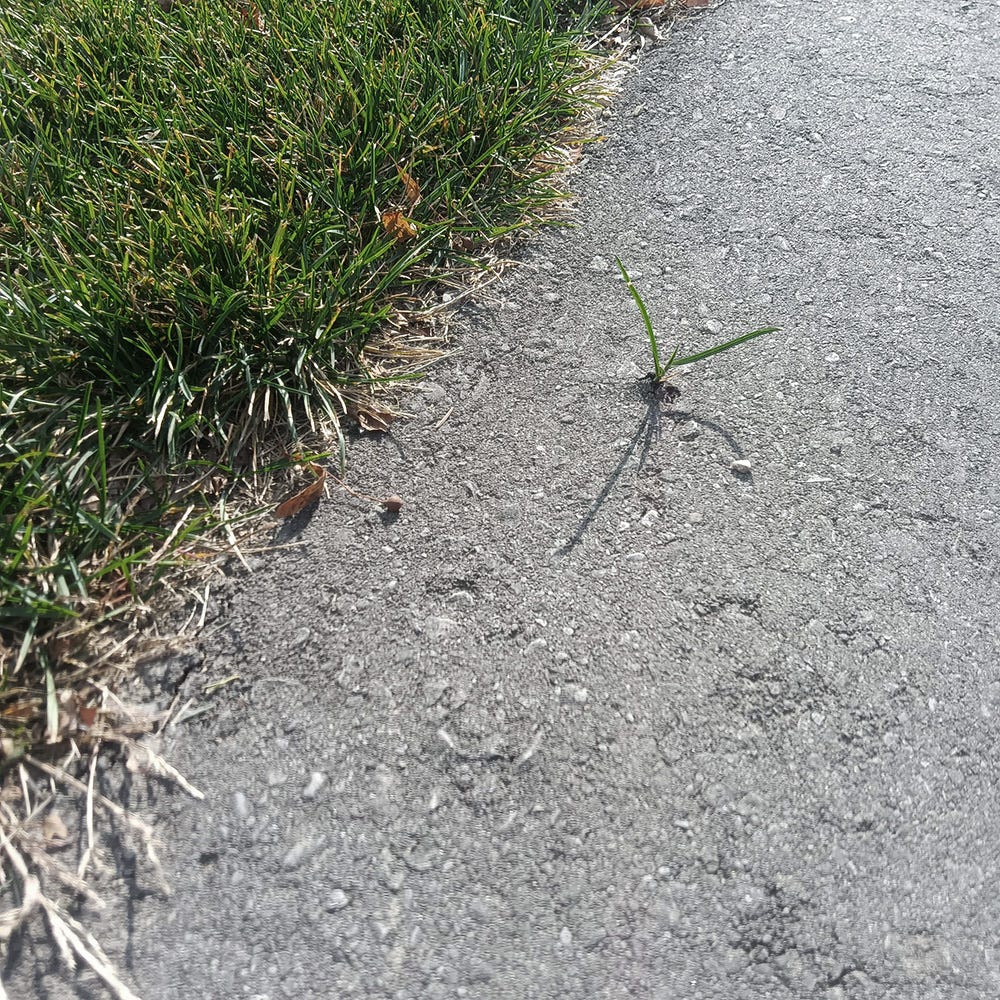
Lately, I’ve been circling back and reading what folks smarter than me have said about capitalism. I started with Marx, naturally, but quickly veered into some post-capitalist thinkers. Most people know Mark Fisher from Capitalist Realism, but I’ve been digging into his other work, like Ghosts of My Life. The first part of this book is called The Slow Cancellation of the Future and Fisher talks about how, over the past 30 years, the future itself has been slowly erased, bit by bit, almost imperceptibly. He argues that contemporary culture is both haunted by the past as well as trapped in nostalgia which has led to a loss of innovation and a stagnation of cultural progression.
Fisher draws heavily from an Italian philosopher named Franco Berardi. I hadn’t heard of Berardi before, but his work is really beautiful and deeply insightful. Berardi writes a lot about how the economic and social shifts of late capitalism affect our minds, bodies, and culture. He sees the current system as not just an economic structure, but something that reshapes how we experience time, work, and communication. According to him, the rise of precarious jobs, constant digital connectivity, and the pressure to always be “on” create a kind of collective exhaustion. We’re caught in this cycle where we’re simultaneously overstimulated and drained, always responding to demands that never end. This hyper-connected, hyper-demanding environment wears us down and leaves little space for genuine creativity or rest. It’s like living in a constant storm of distractions. In Berardi’s words, culture loses its “erotic edge” and becomes dull and drained.
“The intensity and precariousness of late capitalist work culture leaves people in a state where they are simultaneously exhausted and overstimulated. The combination of precarious work and digital communications leads to a besieging of attention. In this insomniac, inundated state, Berardi claims, culture becomes de-eroticised.”
Mark Fisher, The Slow Cancellation of the Future
That got me curious. I found Berardi’s book Breathing: Chaos and Poetry, where he critiques neoliberal capitalism not only for its financial systems but also for the technology behind it, like automated trading and social media’s “like” buttons. According to Berardi, these tools flatten language and communication, turning them into something rigid, standardized, and lifeless.
Berardi sees poetry and chaos as real, concrete ways to fight back against this rigidity. This solution isn’t just metaphorical but literal. For Berardi, poetry breaks the strict rules of market-driven communication by embracing ambiguity, emotion, and subjective meaning. Chaos, inspired by thinkers like Guattari, challenges the order and control capitalism demands by opening up space for unpredictability and creativity. Together, they offer a path to reclaim the richness of human experience from the cold, mechanical logic of late capitalism—not just in theory, but in how we live and connect.
“The poetical act is the emanation of a semiotic flow that sheds a light of nonconventional meaning on the existing world. The poetical act is a semiotic excess hinting beyond the limit of conventional meaning, and simultaneously it is a revelation of a possible sphere of experience not yet experienced (that is to say, the experienceable). It acts on the limit between the conscious and the unconscious in such a way that this limit is displaced and parts of the unconscious landscape - of what Freud called the “inner foreign country” - are illuminated (or distorted) and resignified.”
Franco Berardi, Breathless
This understanding drew me further into the world of aesthetic philosophy. Berardi’s call for poetry feels like a direct response to Adorno’s idea of “culture industry,” where art is turned into another product to sell. Poetry becomes more than just a moment of reprieve or cause for reflection, it becomes a rebellion: a way to reclaim meaning beyond commodification.
Berardi talks a lot about semiosis, the process of making meaning through signs, symbols, and interpretation. This isn’t the rigid “market value” of Marx, where everything is reduced to price tags, or even the practical “use value” of a commodified object. Semiosis happens outside the system in the realm of aesthetics, in that messy, human space where things mean more than their exchange value.
Digging deeper, I found German–American philosopher, social critic, and political theorist Herbert Marcuse, who brings more to this conversation by suggesting that art and aesthetic experience are ways we engage with the world freely, without being tools for profit. For Marcuse, capitalism consumes play, leisure, and even creativity in order to repackage and sell them back to us as products.
So, is the “free” creation of art dying under late capitalism? When I think about it, I find our creativity and joy being constantly associated with experiences through apps and time spent online: YouTube, Netflix, video games—it feels like almost all of our leisure time is mediated through screens designed to keep us hooked and spending. The goal is always profit. How does this limit our cultural and creative freedom? Could this be why so many people feel a collective sense of depression or numbness? And it feels connected back to Fisher and Berardi’s “slow cancellation of the future”: if every creative act is filtered through what the market wants to serve us, how can we imagine or express something truly new?
As we spend more time in these isolated digital boxes, our phones, cars, homes, we lose touch with the aesthetic, the semiotic, the messy, rich texture of life. Berardi says the answer is poetry. Literally, poetry. And chaos. Maybe chaos is what lets us relearn how to live beyond capitalism’s narrow view.
If we want to talk about post-capitalism, this needs to be part of it. It’s not just about economics or politics. It’s about reclaiming what it means to be human.
If Fisher and Berardi are right that the future feels like it’s slowly slipping away through lack of innovation and creativity, then maybe that’s why so many of us feel stuck, exhausted, and creatively blocked. We’re living in a kind of cultural twilight where it’s harder to imagine something new because everything is filtered through screens, profit motives, and constant noise.
But here’s the thing. Recognizing this isn’t just a complaint; it’s a doorway.
Berardi says poetry and chaos might be our way out. Not just poetry as words on a page, but as a way of being, messy, unpredictable, unprofitable. Chaos as a space to experiment, feel, and connect outside the neat boxes capitalism tries to put us in.
So maybe the question becomes how do we reclaim that messy, chaotic space in our own lives? How do we give ourselves permission to slow down, to play, to create without the pressure of making it productive or marketable?
Maybe it’s in the small acts: writing a poem, doodling without a purpose, taking a walk without headphones, sitting with boredom and discomfort rather than filling it with distraction.
Maybe it’s about seeking out moments and communities that resist commodification, spaces where art, play, and connection happen for their own sake, not to be monetized or turned into content.
This doesn’t just feel like a personal act. It feels like a political one. Because every time we push back against capitalism’s claim on our lives, we chip away at the system that tries to controls what we do and how we perceive the world.
Yes! I am so excited that you wrote this. I too recently finished Berardi’s Breathing: Poetry and Chaos and have come across few others online or in my life who are familiar with his work. I have been carrying the questions “how to be happy in this hell?” and “how do we create autonomous spaces of happy survival in this hell?” close to my heart and actions, examining where the values of financial capitalism have supplanted the (aesthetic) joy of being alive and a human among humans. I hope to take up these questions in my writing and my life.